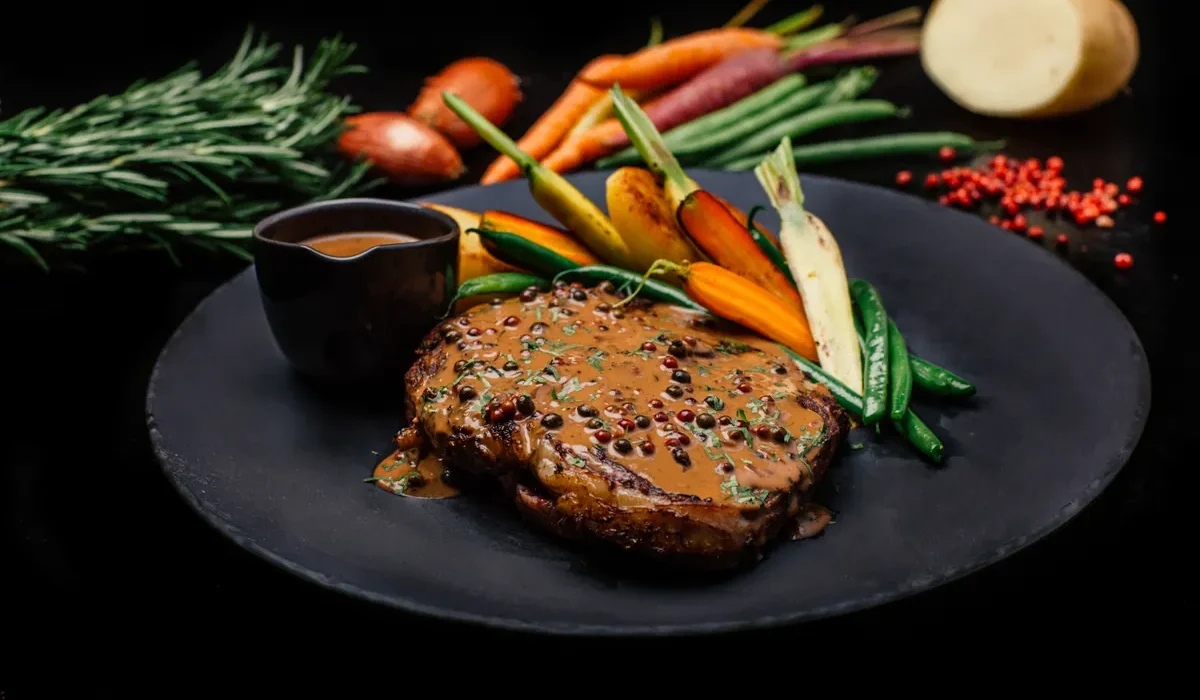

French-inspired one-skillet dinner • 2 servings
This steak au poivre recipe gives you a peppery, pan-seared steak with a silky cream sauce in about 35 minutes, without lighting anything on fire. You’ll crush whole black peppercorns, sear the beef, and use those flavorful browned bits in the skillet to make the sauce. If you don’t cook with brandy or Cognac, there’s an easy broth-only version below.
Use coarsely cracked pepper, a dry steak, and a thermometer. The USDA minimum for whole beef steaks is 145°F (63°C) followed by at least 3 minutes of rest. Skillet times vary with steak thickness and heat.
Jump to a Section
Why This Steak au Poivre Recipe Is Worth Making
I like recipes that tell you what can go wrong before you get to the stove. With a classic steak au poivre recipe, three things really matter: peppercorn texture, steady pan heat, and keeping the cream sauce at a gentle simmer. You don’t need a restaurant kitchen or a collection of expensive pans to manage those.
Pepper that has been crushed rather than finely ground leaves small crunchy pieces on the crust. The same pan that browns the steak gives the sauce much more depth than mixing cream and pepper in a separate saucepan. And because the pan sauce comes together while the steak rests, most of the dinner happens in one skillet.
The version here starts with two thick New York strip steaks. Filet mignon works too, and even sirloin can be excellent if you adapt the timing to the thickness. I explain those differences rather than promise that every cut cooks in exactly four minutes per side.
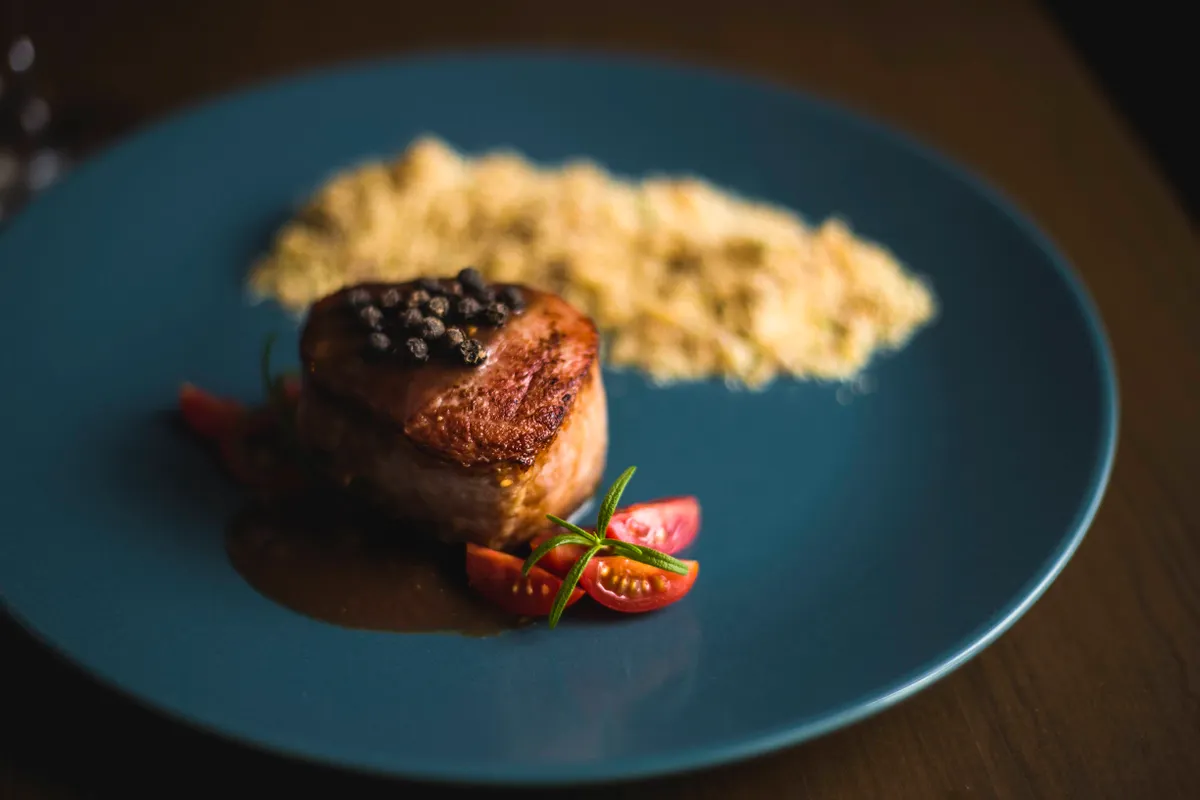
Ingredients for a Classic Steak au Poivre Recipe
The short shopping list is part of what makes this steak au poivre recipe doable on a weeknight. It’s worth buying whole peppercorns, though. Pre-ground pepper behaves differently: its fine particles can turn harsh in a hot skillet and won’t give the same recognizable pepper crust.
- 2 New York strip steaks, about 8–10 ounces each: aim for 1 to 1¼ inches thick, or use two filets of similar thickness.
- 1 tablespoon whole black peppercorns: roughly crush them with a heavy pan, mortar, or rolling pin.
- ¾ teaspoon kosher salt: adjust for the saltiness of your broth and your preferred brand of salt.
- 1 tablespoon neutral oil: canola, avocado, or another suitable high-heat cooking oil.
- 1 tablespoon unsalted butter: for the shallot and sauce after searing.
- 1 small shallot, minced: about 2–3 tablespoons once chopped.
- ⅓ cup low-sodium beef broth: plus ¼ cup more if replacing the brandy.
- ½ cup heavy cream: for a sauce that reduces smoothly.
- Optional ¼ cup Cognac or brandy: see the alcohol-free method below; don’t flambé.
- Optional 1 teaspoon Dijon mustard: useful if you enjoy a little tang to balance the cream.

Steak au Poivre Recipe: How to Crush the Peppercorns
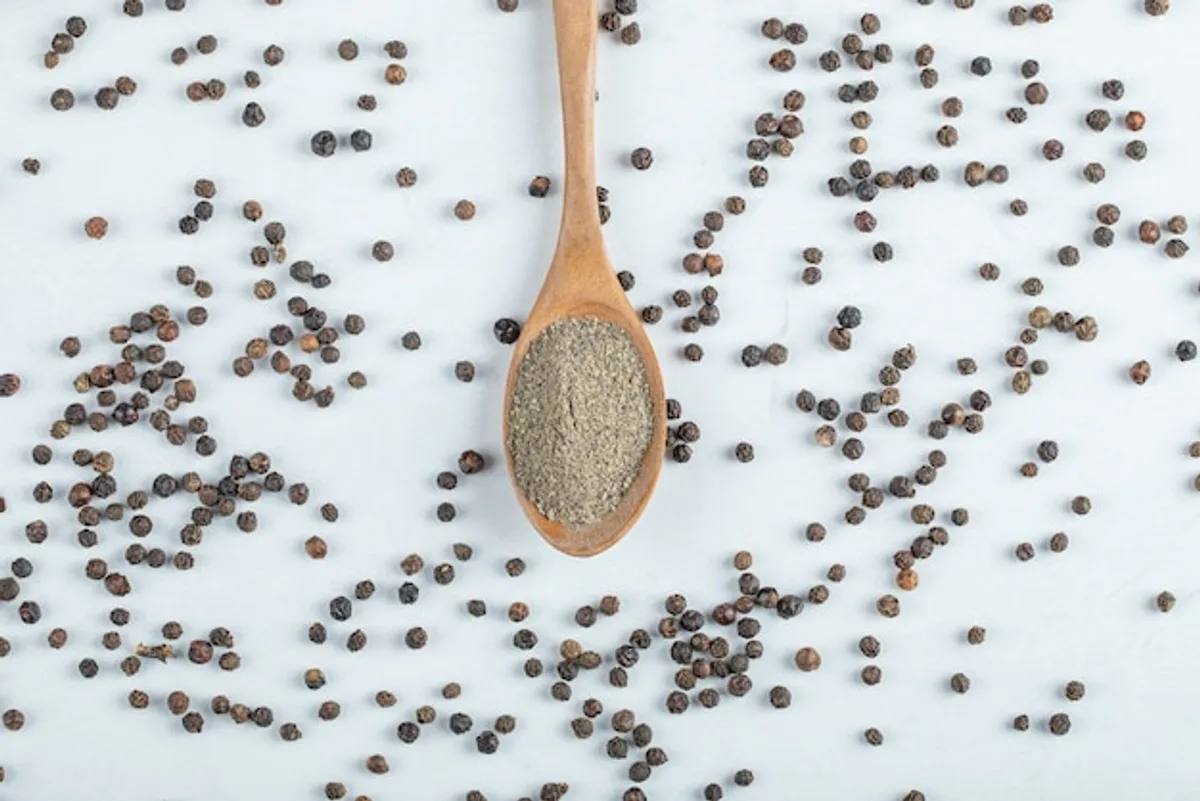
Put the peppercorns in a zip-top bag, press out the air, and tap them firmly with the bottom of a small saucepan. You’re looking for halves, quarters, and rough bits, not a dusting of powder. When a pepper piece is about the size of a coarse breadcrumb, that’s closer to the texture you want.
One tablespoon makes a noticeable but manageable crust for two steaks. If you are sensitive to black pepper, start with two teaspoons and save some for the sauce. A traditional steak au poivre recipe is pepper-forward, but it should still taste like beef, not like chewing a spoonful of spice.

Steak au Poivre Recipe Card
Printable-style recipe card
Steak au Poivre with Creamy Peppercorn Sauce
A straightforward, two-serving steak au poivre recipe built around a pepper crust and quick shallot-cream pan sauce. This is an editorially developed method; times are estimates, not a substitute for a thermometer.
Ingredients
- 2 NY strip steaks, 8–10 oz each
- 1 tbsp whole black peppercorns, coarsely cracked
- ¾ tsp kosher salt
- 1 tbsp neutral oil
- 1 tbsp unsalted butter
- 1 small shallot, finely minced
- ⅓ cup low-sodium beef broth
- ¼ cup Cognac or brandy (optional; or use ¼ cup more broth)
- ½ cup heavy cream
- 1 tsp Dijon mustard (optional)
Directions
- Pat the steaks dry. Crack the peppercorns and press them onto both sides of the salted steaks.
- Warm the oil in a heavy skillet over medium-high heat. Add the steaks without overcrowding.
- Sear until well browned, turning when needed. Reduce heat if the pepper starts darkening too quickly. Measure the center with a food thermometer; reach at least 145°F, then rest at least 3 minutes.
- Pour off excess fat, leaving the browned bits. Reduce to medium-low; melt butter and soften the shallot for about 1–2 minutes.
- Take the pan off the burner before adding optional brandy and broth. Return to medium-low and simmer, scraping the browned bits.
- Stir in cream and optional Dijon. Simmer gently for 3–5 minutes, stirring until it lightly coats a spoon.
- Taste and adjust salt. Spoon the warm peppercorn sauce over the rested steaks and serve.
Safety: USDA recommends whole beef steaks reach 145°F (63°C) and rest for 3 minutes. Refrigerate leftovers promptly and reheat leftovers to 165°F (74°C).
How to Make Steak au Poivre, Step by Step
This steak au poivre recipe works best when you treat searing and sauce-making as two separate stages. The steak wants strong, controlled heat; the cream sauce wants patience. Don’t rush the sauce by leaving the burner on high while the cream is bubbling hard.
Step 1: Dry and season the beef
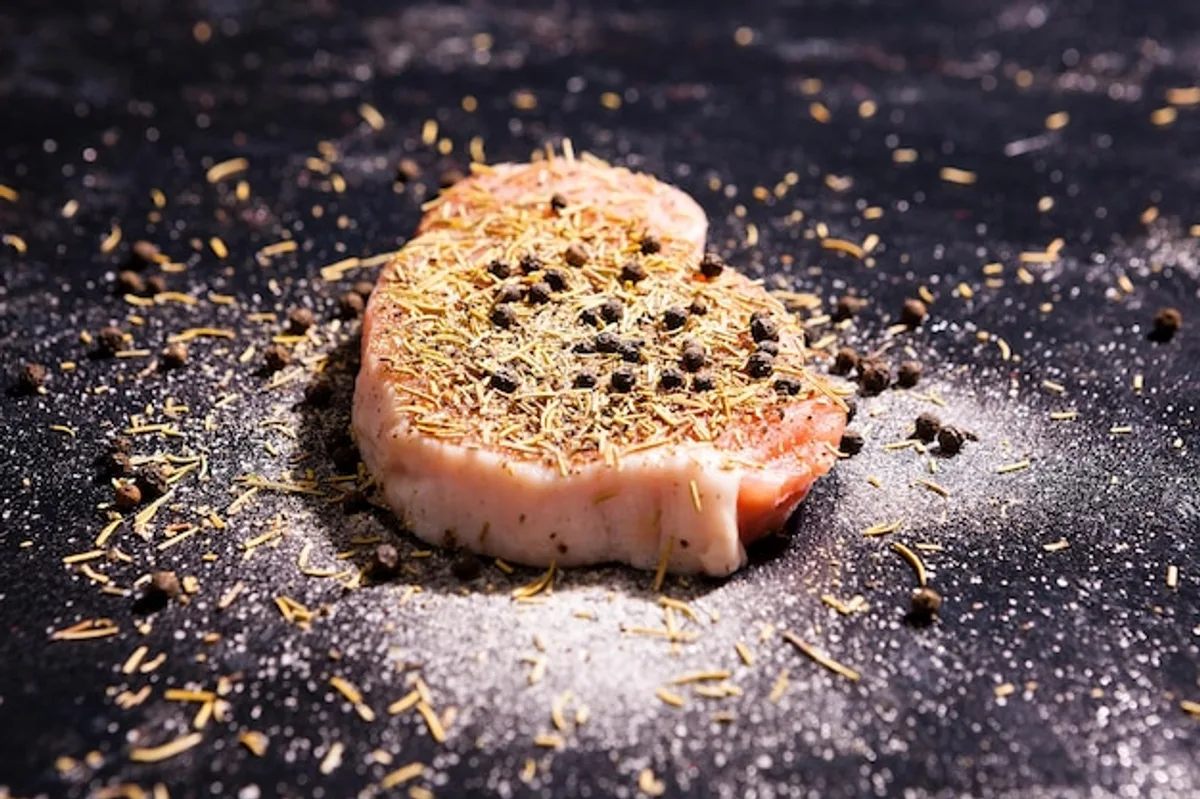
Open the package, lay the steaks on a tray, and blot every surface thoroughly with paper towels. Moisture on the outside has to evaporate before browning can begin. Season with salt, then press the coarse pepper onto the meat so it sticks instead of sliding around the skillet.
Use a clean cutting board for anything that will be eaten without cooking. After handling raw beef, wash your hands and clean surfaces and utensils before touching ready-to-eat foods. This small bit of organization makes steak night much easier.
Step 2: Heat the pan and sear
A heavy 10–12-inch skillet gives two steaks enough space to sear rather than steam. Heat the oil over medium-high until it looks fluid and shimmery. Lay the beef in gently and let the underside develop a brown crust before turning. If pepper starts scorching or the pan smokes aggressively, lower the heat a notch.
Some restaurant instructions give fixed times, but a 1-inch strip and a 1½-inch filet behave very differently. Turn as necessary for an even sear and begin checking the center early. Use the 145°F minimum and 3-minute rest recommended by the USDA instead of deciding by color alone.

Step 3: Give the steak its rest
Move the steaks to a clean plate or board once the thermometer confirms the minimum temperature. Let them sit at least three minutes. This is the ideal moment to lower the heat and turn the skillet drippings into sauce; it’s also when you should resist slicing just to check the color.
Step 4: Build the cream sauce in the same skillet
Spoon out large pools of grease, but leave the tasty brown film stuck to the pan. Add butter and shallot over medium-low heat until the shallot softens. Take the skillet off the burner before adding the optional Cognac and broth, then return it to gentle heat and scrape up the browned bits with a wooden spoon.
Add the cream and stir slowly while it bubbles at a low simmer. In roughly three to five minutes, it should coat the back of a spoon. This steak au poivre recipe doesn’t need a dramatic flare-up: keep it as a simple stovetop pan sauce and don’t ignite the alcohol.
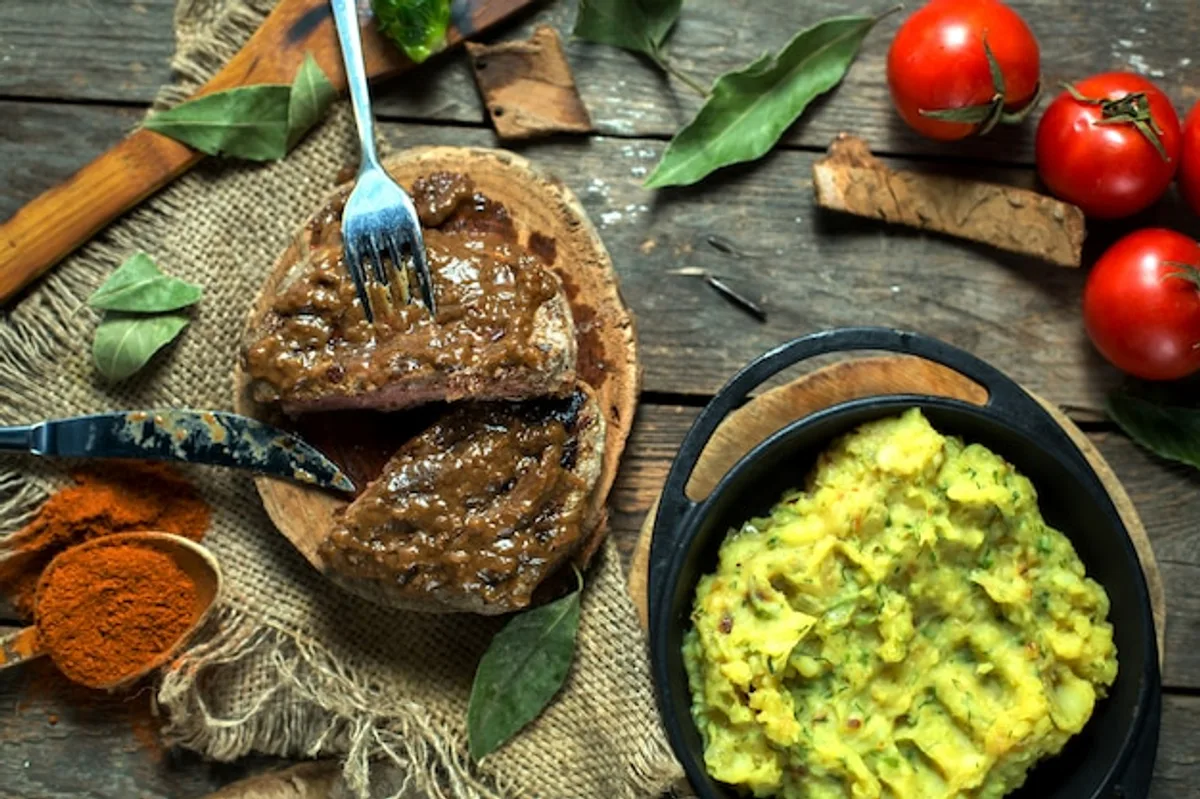
Step 5: Taste, adjust, and plate
Try a small spoonful of sauce before adding more salt. Beef broth varies a lot by brand, and pepper brings its own strong flavor. If the sauce tastes flat, a teaspoon of Dijon adds a little brightness. If it tastes too sharp, a small splash of cream can soften it.
Plate the steak first, then spoon sauce over the top and around the side so the browned crust is still visible. The final result should feel like a special-occasion dinner, even though the process is mostly straightforward skillet cooking.
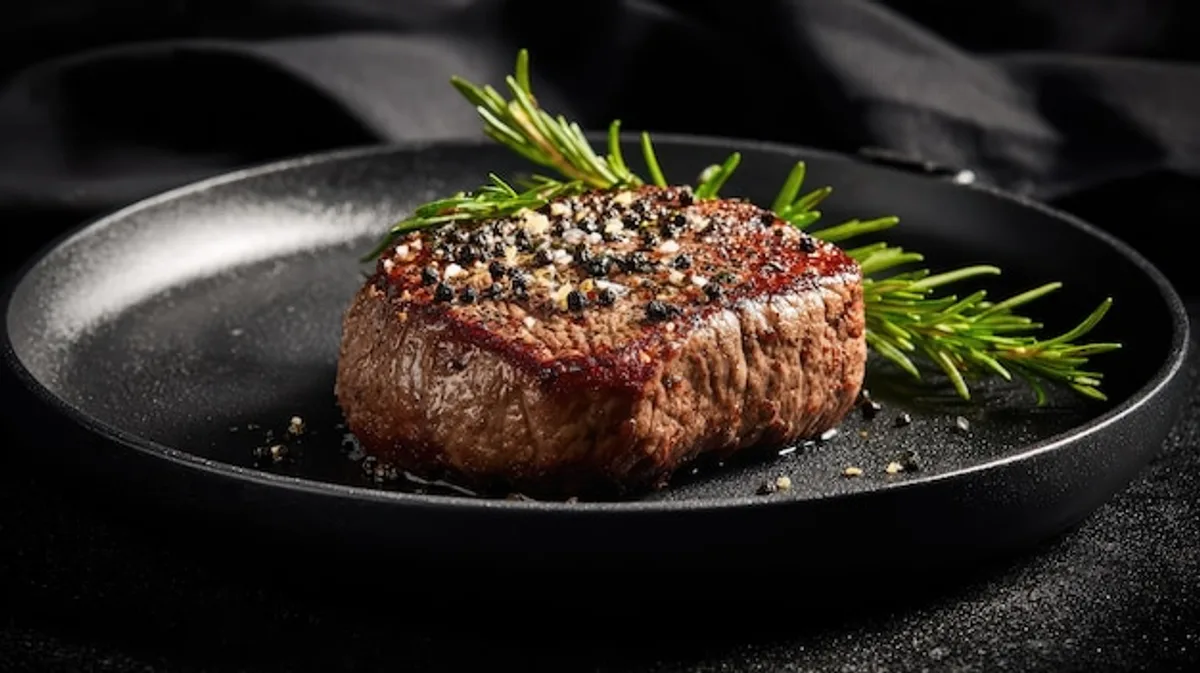
Which Cut of Steak Works Best?
The steak in a steak au poivre recipe doesn’t need to be the priciest thing in the butcher case. The main difference between cuts is the balance of tenderness, beef flavor, and how forgiving they are if the heat runs a little high.
| Cut | Best quality | Watch out for |
|---|---|---|
| NY strip | Beefy flavor, firm texture, great crust | Trim very thick outer fat if it flares |
| Filet mignon | Very tender and mild | Thick centers take longer than thin strips |
| Ribeye | Rich marbling, lush flavor | More rendered fat; drain excess before sauce |
| Sirloin | Budget-friendly with strong beef flavor | Often thinner and less forgiving |
If you’re shopping for the first time, I would choose New York strip in a consistent thickness. Two similar steaks are easier to cook evenly than a thick filet beside a thin sirloin. Tenderloin is a classic choice, but strip is a practical alternative for a weeknight steak au poivre recipe. If you are choosing a grilling cut instead, our skirt steak vs flank steak comparison explains differences in grain, thickness, and best uses.
You can ask a butcher for two pieces of roughly the same thickness. Weight helps with portions; thickness matters more for cooking time. If only thin steaks are available, keep a closer eye on the thermometer and be ready to start the sauce sooner.
The Peppercorn Sauce: Cognac or No Cognac
Cognac gives a classic peppercorn cream sauce a distinctive aroma, but it isn’t a requirement for a good dinner. For the no-alcohol variation, replace the quarter cup of Cognac with the same amount of extra low-sodium beef broth. The sauce will taste a little less complex, but the shallot, pan juices, cracked pepper and cream still do the heavy lifting.
If you choose the brandy version of this steak au poivre recipe, move the skillet off the active burner before you pour it in, use a measured amount, and don’t flambé. Alcohol can ignite unexpectedly near gas flames. Removing the pan from direct heat and simmering without flame is a simpler home-kitchen approach.
How to know the sauce is ready
Dip a spoon into the sauce and lift it. You’re looking for a thin, even coat, not a stiff gravy that clings in a lump. If a spoon leaves a clear path for a moment when you stir, you’re close. Take the pan off the heat as soon as the sauce is thick enough, because cream sauces often tighten as they cool.
For this steak au poivre recipe, I keep the sauce pourable enough to run around the steak. A heavy, gluey peppercorn sauce can hide the crust and make the plate feel richer than it needs to be. You can always reduce another minute; reversing an over-reduced sauce takes more care.
7 Common Mistakes and How to Fix Them
Most problems with a steak au poivre recipe show up in the same handful of places. Here are the quick fixes I’d keep beside the stove rather than learn halfway through dinner.
- 1. Powdery pepper: Fine-ground pepper burns more readily and can’t deliver the classic texture. Use whole peppercorns and crush them coarsely.
- 2. Wet steak: Damp meat steams before it browns. Pat it dry just before seasoning.
- 3. Crowded skillet: Two steaks pressed against each other drop pan temperature. Choose a larger skillet or cook in separate batches.
- 4. Burned pepper crust: A pan that’s too hot can make pepper taste bitter. Turn the heat down when the crust darkens too fast.
- 5. Guessing doneness: Time is only an estimate. Use a food thermometer and follow the USDA’s 145°F minimum with a 3-minute rest.
- 6. Broken cream sauce: Boiling cream aggressively can make it look greasy. Lower to a gentle simmer and whisk steadily.
- 7. Too-thick sauce: Add broth one tablespoon at a time until it pours easily; for a thin sauce, reduce gently a little longer.
A sauce that separates isn’t automatically fixed by adding more cream. First take the pan off heat and whisk in a little warm broth. If it won’t come together, focus on serving the steak safely rather than continuing to boil the mixture. A new quick pan sauce often takes less effort than rescuing one that’s already gone too far.
Interactive Steak and Sauce Amount Calculator
Cooking for more people? This simple steak au poivre recipe calculator changes the ingredients for two, four or six servings and shows the broth substitution for a no-alcohol sauce. It only works inside your browser: nothing is sent, stored or added to a cart.
Ingredient calculator
The quantities are useful, but don’t assume a six-steak batch cooks in the same time as two steaks. Work in batches if the pan is full, and check the temperature of every steak. For a bigger group, keep the sauce warm over low heat only briefly so it stays smooth.
What to Serve With Peppercorn Steak
The sauce already brings richness, so I would keep the side simple. Mashed potatoes are the traditional comfort-food pairing, but crispy roast potatoes, green beans, sautéed mushrooms, or a sharp leafy salad work just as well. If you want a lighter plate, put half the steak beside a big pile of green vegetables.
For a protein-centered dinner with fewer starchy sides, see these high-protein low-carb meal ideas. If the family wants a different kind of beef dinner the following night, our Big Mac bowls have a completely different, crunchy-and-creamy feel.
A steak au poivre recipe also plays nicely with roasted asparagus. Toss the asparagus with olive oil, roast separately until tender, and finish with lemon after it comes out. Keep the side lightly seasoned; the steak sauce is already bringing most of the pepper.
Make-Ahead, Storage and Reheating
For the best texture, eat this steak au poivre recipe right after cooking. The sauce is at its smoothest, and the exterior of the steak is still distinct from the creamy topping. If you plan to eat later, keep the steak and sauce in separate containers, especially if you want the crust to stay noticeable.
Refrigerate cooked beef within two hours of preparation (one hour when the ambient temperature exceeds 90°F). USDA guidance says cooked meat leftovers keep for three to four days at 40°F or colder. Reheat leftovers to 165°F, and use gentle heat with a small splash of broth for the sauce, stirring while it warms.
Freezing a cream-based sauce is possible, but its texture may change after thawing. If you are cooking for company, I would measure the sauce ingredients and crush the peppercorns ahead instead of making the finished sauce in advance. That’s prep you can get out of the way without sacrificing the final texture.
Food safety note: raw steak should stay refrigerated until you are ready to prepare it. Keep raw beef juices away from salad or garnishes and wash tools that contact raw meat. A digital thermometer is much more reliable than comparing the inside color to a photo.
Free Steak au Poivre Recipe Printable
I made a one-page printable to keep beside the stove: it has a complete two-person shopping checklist, a compact cooking order, the cream-sauce fixes, and the USDA temperature reminder. It pairs with this steak au poivre recipe when you don’t want to scroll on a phone while cooking.
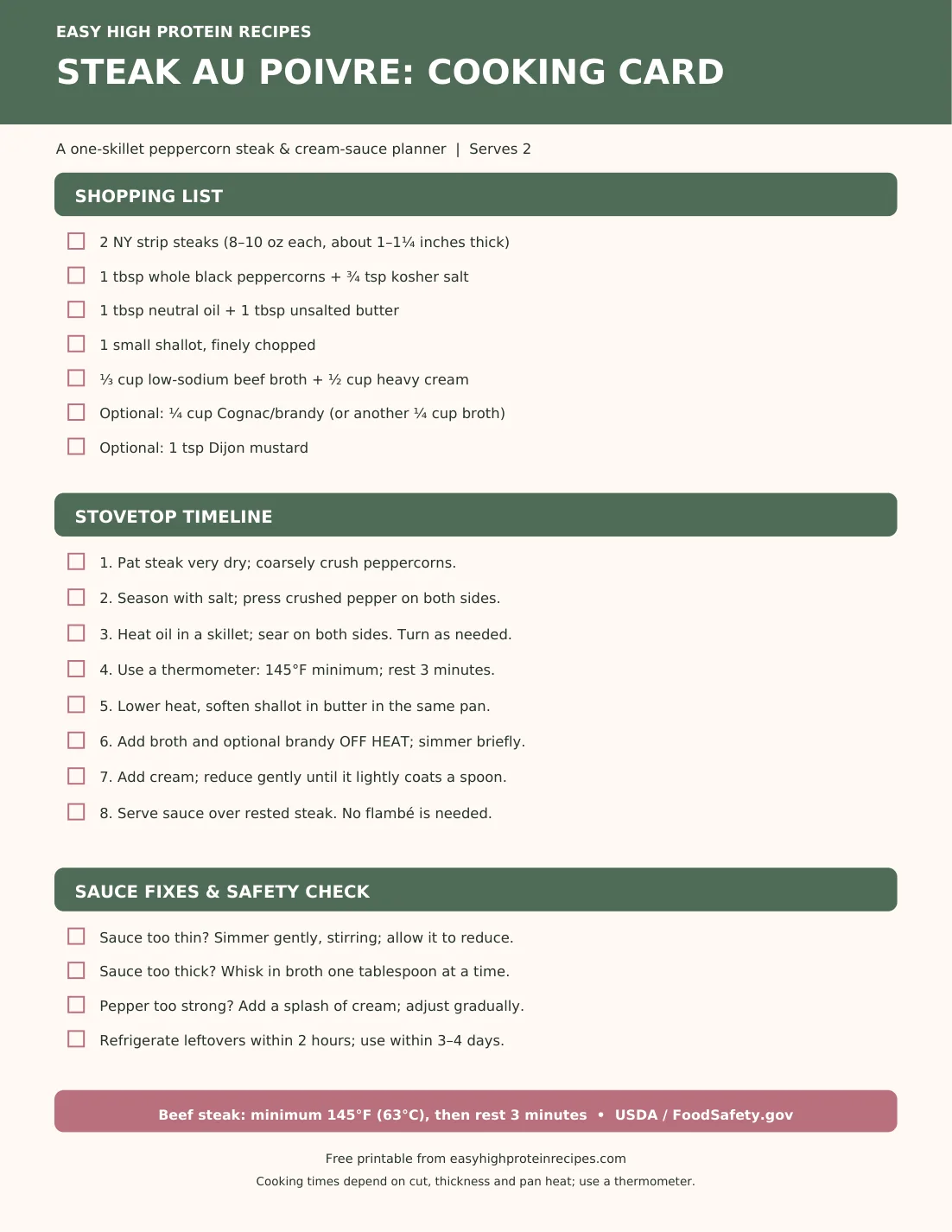
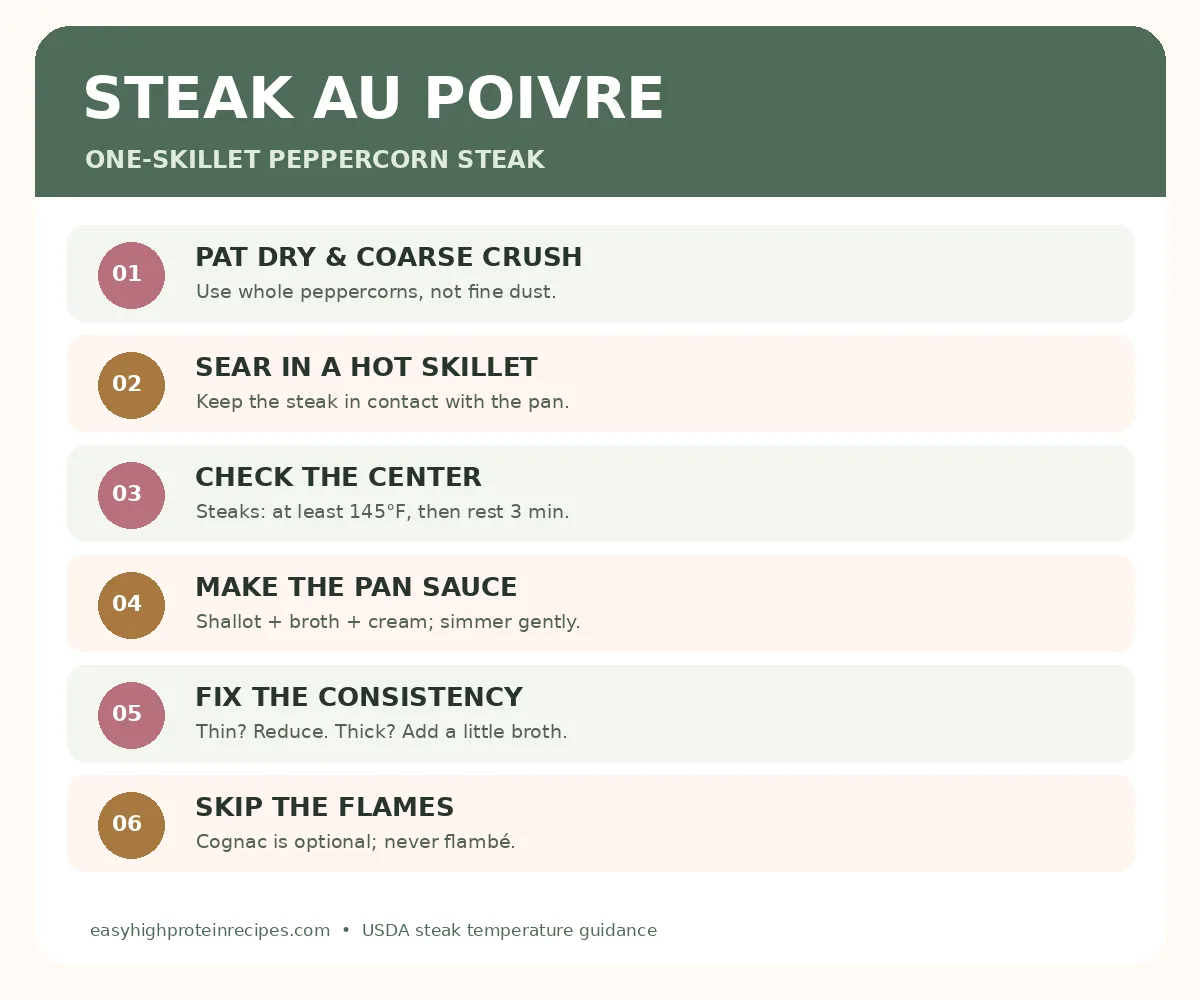
The infographic below is a condensed reminder of the steak and sauce steps; it isn’t a replacement for the detailed instructions or thermometer check.
Steak au Poivre Recipe FAQs
What does au poivre mean?
Au poivre means “with pepper” in French. In cooking, it describes steak pressed with crushed peppercorns and usually served with a peppery pan sauce. The defining part of a steak au poivre recipe is the coarse pepper crust, not a particular type of potato on the side.
What is the best steak for steak au poivre?
Filet mignon is a classic, tender choice. New York strip brings more pronounced beef flavor and is easy to find in American supermarkets. Either cut works well for a steak au poivre recipe as long as you choose a consistent thickness and check the center with a thermometer.
Can I make steak au poivre without Cognac or brandy?
Yes. Replace the ¼ cup of brandy with another ¼ cup of low-sodium beef broth for two servings. Your steak au poivre recipe will still get depth from the shallot, seared beef fond, cracked pepper and cream. Skip flambé entirely.
Can I make the sauce without heavy cream?
Heavy cream is the most predictable base for the rich sauce in this version. Half-and-half may give a thinner, less stable result, especially if boiled hard. If you need a dairy-free preparation, use a separately tested sauce method rather than assuming a one-to-one substitute will behave the same.
Why did my peppercorn sauce turn bitter?
The most common culprit is scorched pepper, especially when finely ground spices sit on a smoking-hot surface. For the next steak au poivre recipe, use larger pepper pieces and turn the heat down as soon as the crust gets too dark. A little more cream may soften strong pepper flavor, but burned spices are hard to erase.
How do I know when the steak is safely cooked?
Use a food thermometer in the thickest part, avoiding the pan or bone. FoodSafety.gov specifies at least 145°F (63°C) for whole beef steaks, followed by a three-minute rest. Times and color alone aren’t dependable indicators.
More Easy Protein-Rich Dinner Ideas
If you liked the single-skillet approach here, our one-pan honey garlic salmon and vegetables is another straightforward dinner. For a different comfort-food night, try the easy chicken pot pie recipe with ready-cooked chicken and frozen vegetables.
Need something especially easy for packed weekdays? The high-protein garlic chicken rice bowl works well for a fresh vegetable-and-grain plate, while creamy high-protein pasta keeps the creamy-sauce theme going without requiring steak.
If you have more time for a slow-cooked French dinner, try our beef bourguignon recipe with tender chuck and a rich red wine sauce.
Sources and Editorial Note
This steak au poivre recipe is an editorially developed cooking guide based on established pan-searing and cream-sauce methods. It is not a claim that the photographs show one personally tested cooking session. Photos are licensed illustrative stock images from Pexels and Magnific Stock; the food-safety guidance comes from the official sources below.
- FoodSafety.gov: Safe Minimum Internal Temperatures — beef steak minimum and rest time.
- USDA FSIS: Safe Meat Temperatures — thermometer guidance.
- FDA: Safe Food Handling — preventing cross-contamination.
- USDA FSIS: Handling Leftovers — refrigeration and reheating.
- USDA FSIS: Meat in the Refrigerator — storage times.
Editorial note: Ingredient amounts, times and flavor adjustments are practical cooking guidance, not nutritional or medical advice. If you have an allergy or need dietary restrictions, check ingredient packaging yourself. Follow local food-safety rules and use a clean thermometer for every piece of meat.



4 thoughts on “Steak au Poivre Recipe: 7 Easy Steps for Perfect Steak”