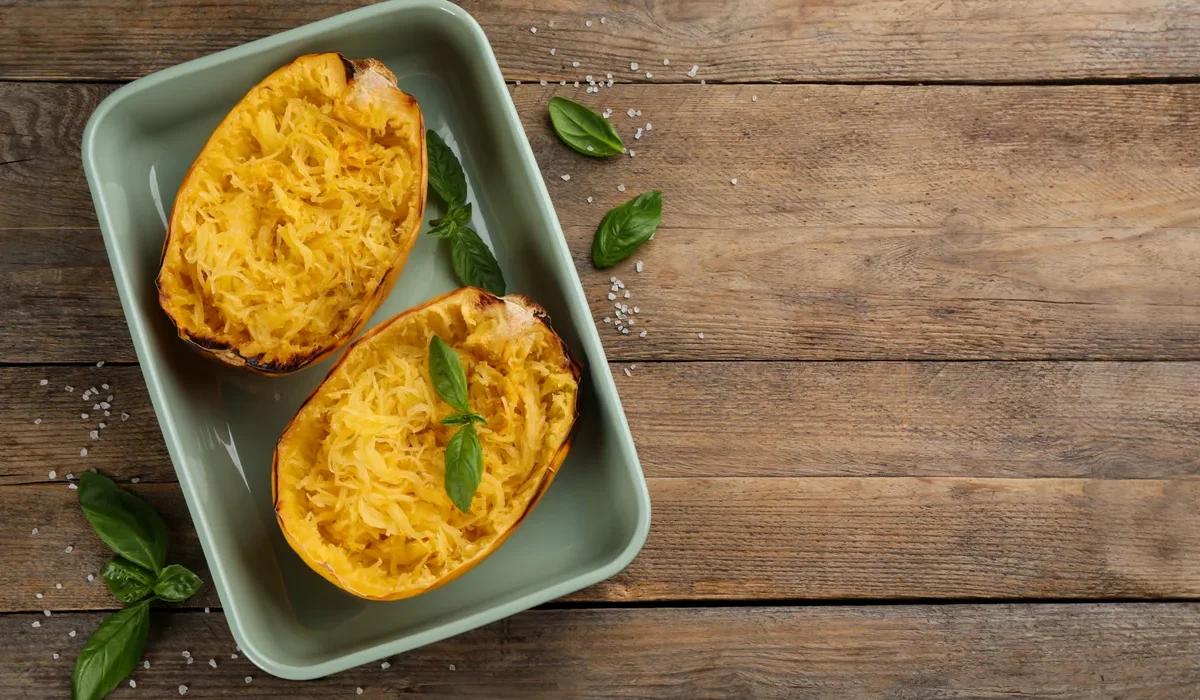

To learn how to cook spaghetti squash, start with the oven: cut the squash in half, scoop out the seeds, and roast it cut side down at 400°F for about 35–50 minutes. The microwave is faster, usually taking around 12 minutes for a medium squash. Either way, it’s done when a fork easily loosens the flesh into golden strands.
You don’t need a complicated recipe to get this vegetable right. What matters is choosing a method that matches the evening, checking the squash before it gets mushy, and adding your sauce after cooking rather than drowning the strands while they roast. This guide walks through four methods, a size-based time finder, and an easy one-page printable.
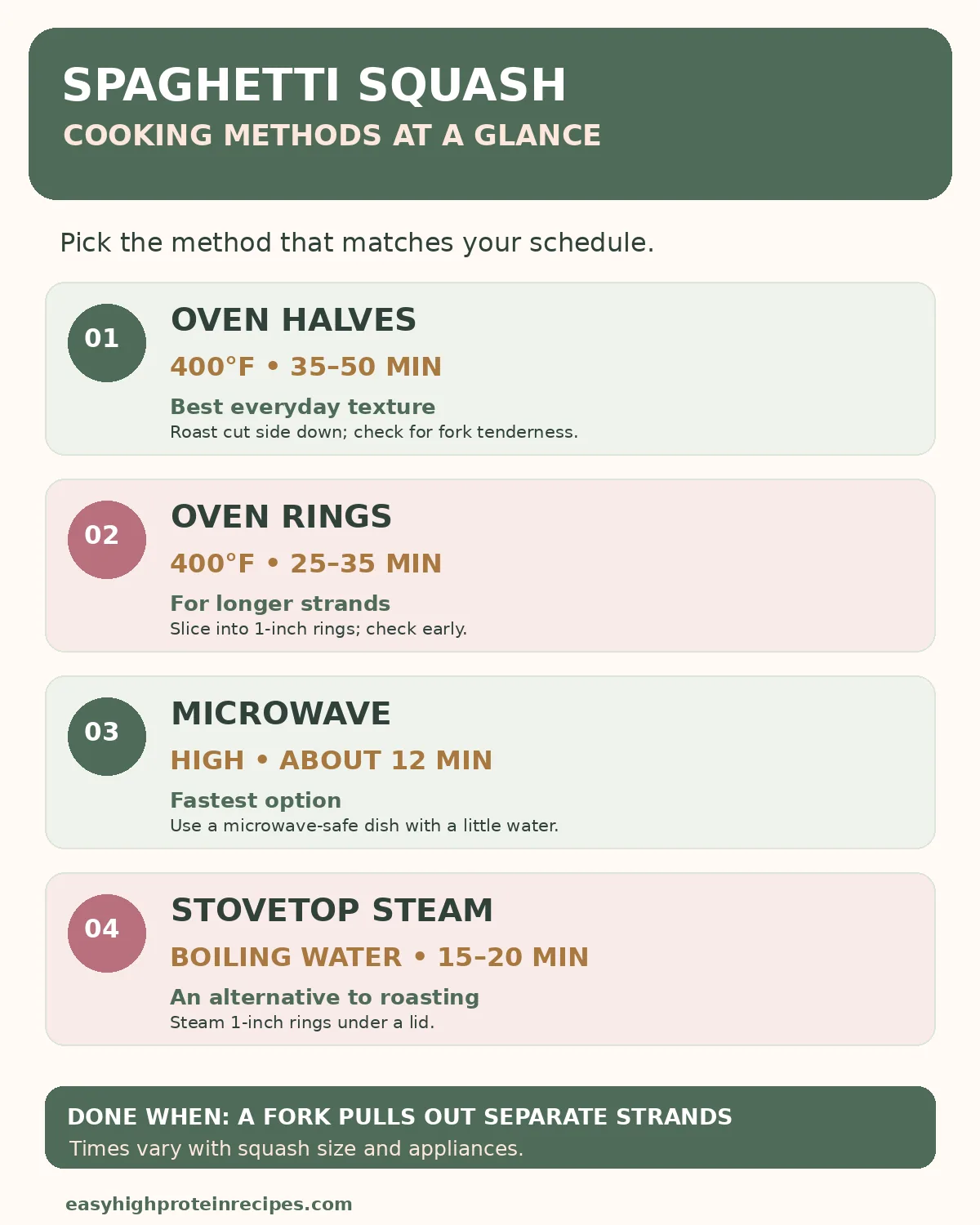
Oven halves at 400°F: 35–50 min
Microwave: about 12 min
Oven rings: 25–35 min
Steam pieces: 15–20 min
Times are starting estimates for a medium squash; confirm doneness with a fork.
On this page
- How to Cook Spaghetti Squash: Quick Comparison
- Choose Your Squash and Tools
- How to Cut a Spaghetti Squash Safely
- How to Cook Spaghetti Squash in the Oven
- How to Roast Spaghetti Squash in Rings
- How to Microwave Spaghetti Squash
- How to Steam Spaghetti Squash on the Stove
- How Long to Cook Spaghetti Squash: Interactive Finder
- How to Prevent Soggy Squash
- Toppings, Proteins and Serving Ideas
- Storage and Meal Prep
- Free Printable Cooking Chart
- Frequently Asked Questions
- Related Recipes
- Sources and Editorial Note
How to Cook Spaghetti Squash: Quick Comparison
There is no exact minute that suits every squash. One weighing two pounds can finish much sooner than a four-pound squash, and a covered dish creates a different texture than an open baking tray. Use the chart to decide when to begin testing, not to decide when dinner must be finished.
| Method | Medium squash | Texture |
|---|---|---|
| 400°F oven halves | 35–50 min | Roasted, tender |
| 400°F oven rings | 25–35 min | Distinct strands |
| Microwave HIGH | 10–14 min | Soft, moist |
| Steamer basket | 15–20 min | Delicate, moist |
I recommend the uncovered oven method if you’re making a noodle-style dinner. Its gentle roasted flavor handles tomato sauce, pesto, and garlic better than wetter cooking methods. If speed matters more, the microwave still delivers a good side dish without an hour of oven time.
Choose Your Squash and Tools
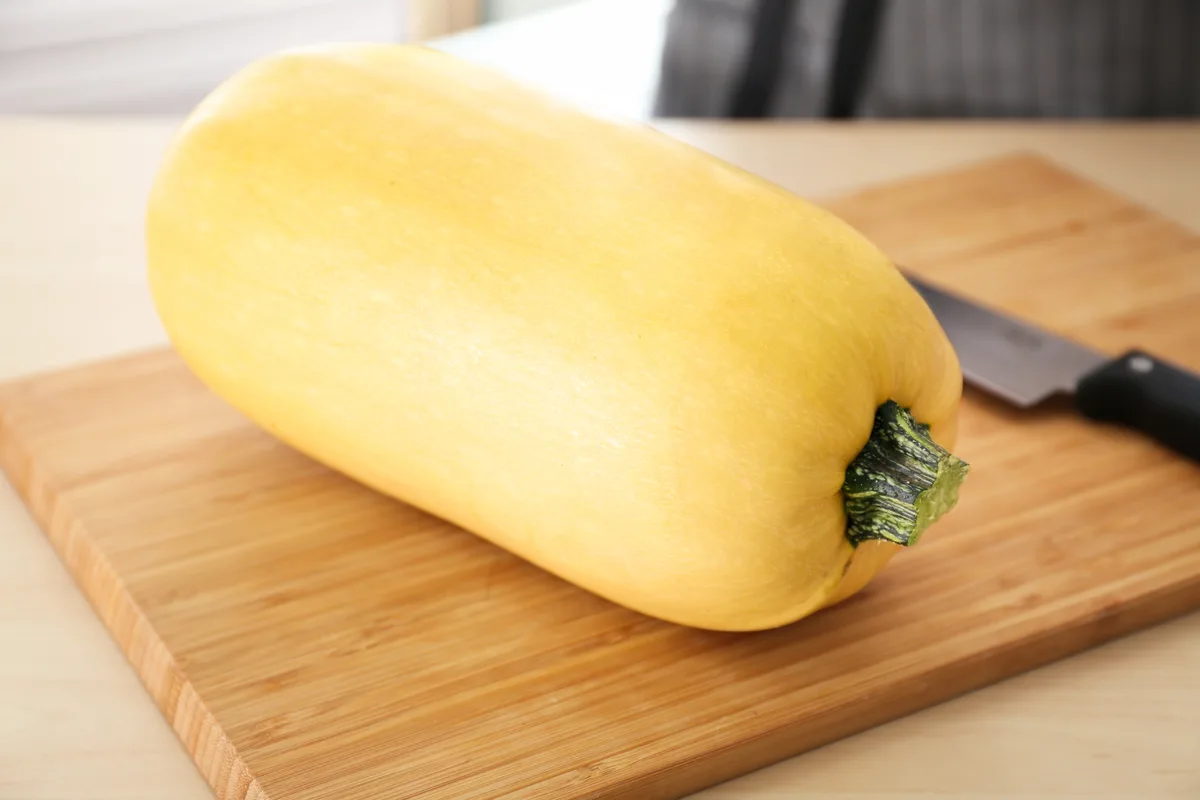
Choose a squash that feels heavy for its size and has firm skin without leaking or soft spots. Don’t worry if two squash look slightly different shades of yellow; color varies. A medium one around three pounds works well with the approximate cooking chart, but you can skip weighing it if you check as you cook.
Keep the basic kit small: a sharp chef’s knife, a stable cutting board, a sturdy spoon, a fork, a rimmed baking sheet, and oven mitts. For flavor, start with olive oil, salt, and black pepper. You can add garlic powder, herbs, lemon, cheese, or sauce after the squash is tender.
- Oven method: sheet pan and optional parchment paper.
- Microwave method: microwave-safe shallow dish and one or two tablespoons of water.
- Steam method: basket, tight-fitting lid, and a pot with a little water below the basket.
- Serving: fork for separating strands, a shallow bowl, and a sauce prepared separately.
How to Cut a Spaghetti Squash Safely
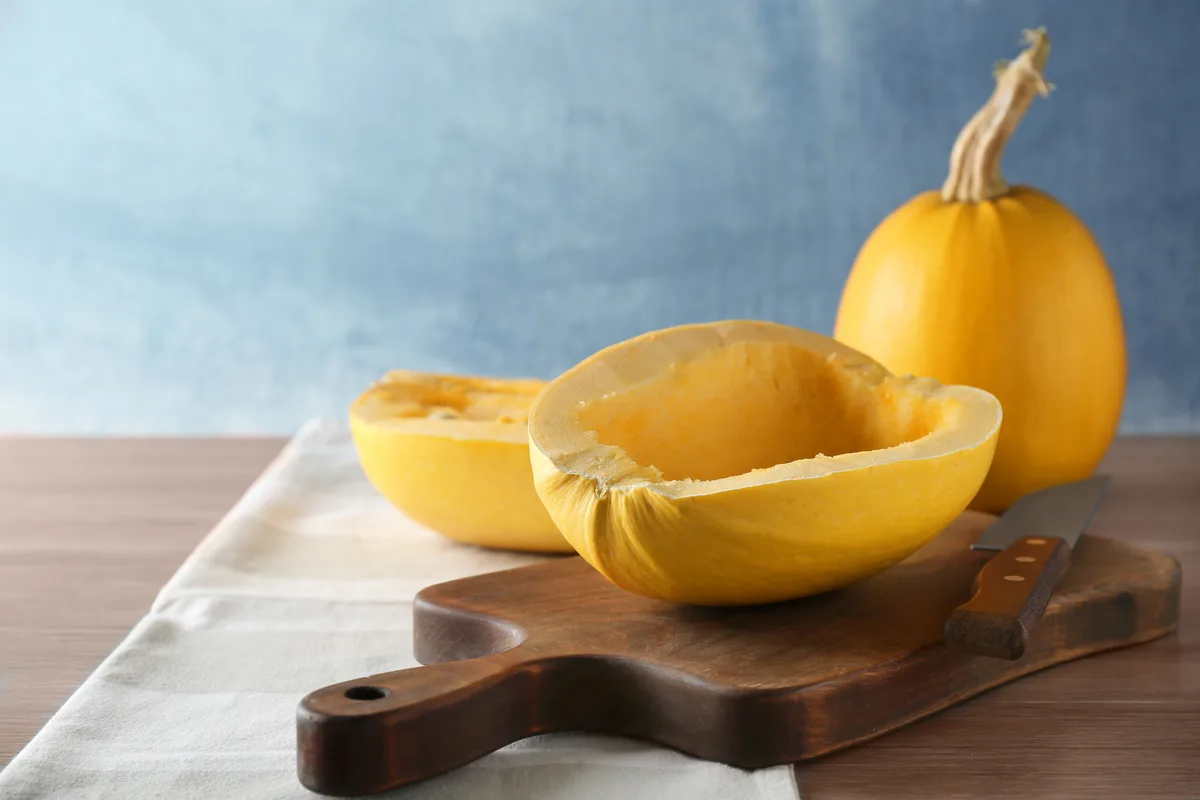
Wash the whole squash first and pat it dry. Place a damp towel under the cutting board so it won’t slip, then steady the vegetable on a flat side or a trimmed end. A sharp, sturdy knife gives you more control than a small flexible blade.
- Cut lengthwise for two boat-shaped halves; work slowly and keep fingers clear of the blade.
- Use a sturdy spoon to scrape out the seeds and loose central fibers, leaving the solid flesh around the edges.
- For shorter sections, slice crosswise into roughly one-inch rings and remove the central seeds.
- If the rind is too hard to cut safely, stop and soften it briefly in the microwave or oven, then let it cool enough to handle before cutting.
Never force a stuck knife. MedlinePlus suggests warming a hard squash for a few minutes before cutting it. If microwaving a whole squash, pierce the rind first to allow steam to escape, and use oven mitts when handling hot squash.
A lengthwise cut creates a simple bowl for stuffing. Rings expose more cut surface and give you smaller portions. Neither approach is universally better; use the shape that fits your cookware and feels safest to handle.
How to Cook Spaghetti Squash in the Oven
How to cook spaghetti squash in the oven, step by step
This is the method I recommend first because it requires very little attention after the pan goes into the oven. At 400°F, a medium squash often needs 35–50 minutes. The important detail is the cut side down placement: the flesh cooks evenly against the pan while moisture can escape around the edges.
- Preheat the oven to 400°F. Set a rack near the center and line a rimmed sheet pan with parchment if you prefer an easier cleanup.
- Cut the squash lengthwise, scoop out the seeds, and blot the cut faces if they look especially wet.
- Rub or brush on a small amount of olive oil. Season the flesh with salt and pepper, but save wet sauces for later.
- Set the halves cut side down, leaving some space between them. Do not add water to the tray if you want a drier roasted finish.
- Roast for roughly 35–50 minutes for a medium squash. Check sooner for a small squash and later for a large, thick one.
- Rest the halves until safe to handle. Flip, then use a fork to gently lift the golden strands into a bowl.
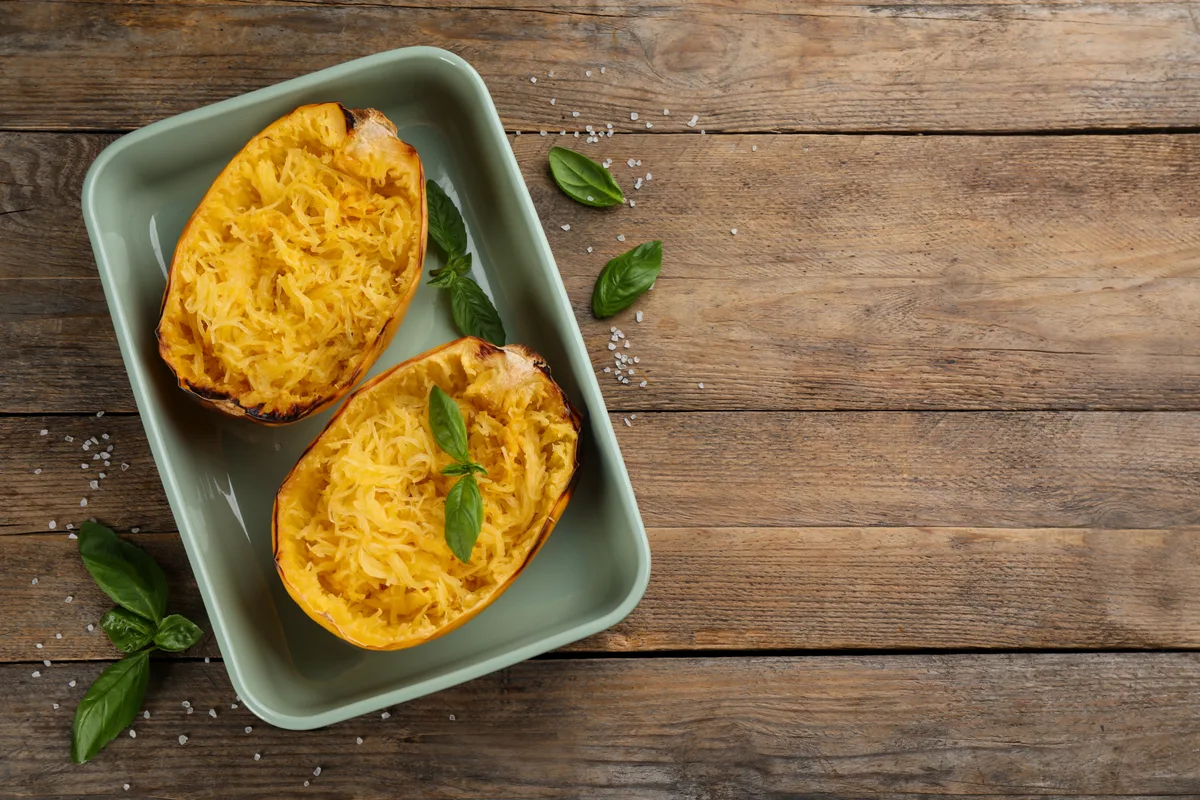
A small squash may be ready after about 30 minutes; a large, dense one may need up to an hour. Don’t trust the skin color alone. Pierce the thickest flesh with a fork and try pulling it sideways: the strands should separate with little resistance, but still hold their shape rather than collapse into mash.
Try the fork at the thickest point, not just the thin edge. If the center still feels hard, roast five minutes more and test again. If a light scrape releases flexible strands, stop cooking. That final texture check works better than any fixed time on a recipe card.
For a richer flavor, toss the finished strands with a little more salt, pepper, olive oil, and chopped parsley while still warm. Keep any heavy sauce in a separate pan until serving. This small step preserves the roasted flavor and makes dinner feel less watery.
How to Roast Spaghetti Squash in Rings
Rings are useful when you want even portions or shorter cooking time. Cut the squash across the middle into pieces about one inch thick, remove the seedy centers, and arrange the rings on a lightly oiled rimmed baking sheet. Keep the pieces in a single layer so the edges roast instead of steam.
Set the oven to 400°F. Start checking after about 25 minutes, especially if the slices are thin. Most medium-squash rings take roughly 25–35 minutes, but crowded or thick slices can need longer. Turn one ring carefully and see whether a fork can loosen the strands from the peel.
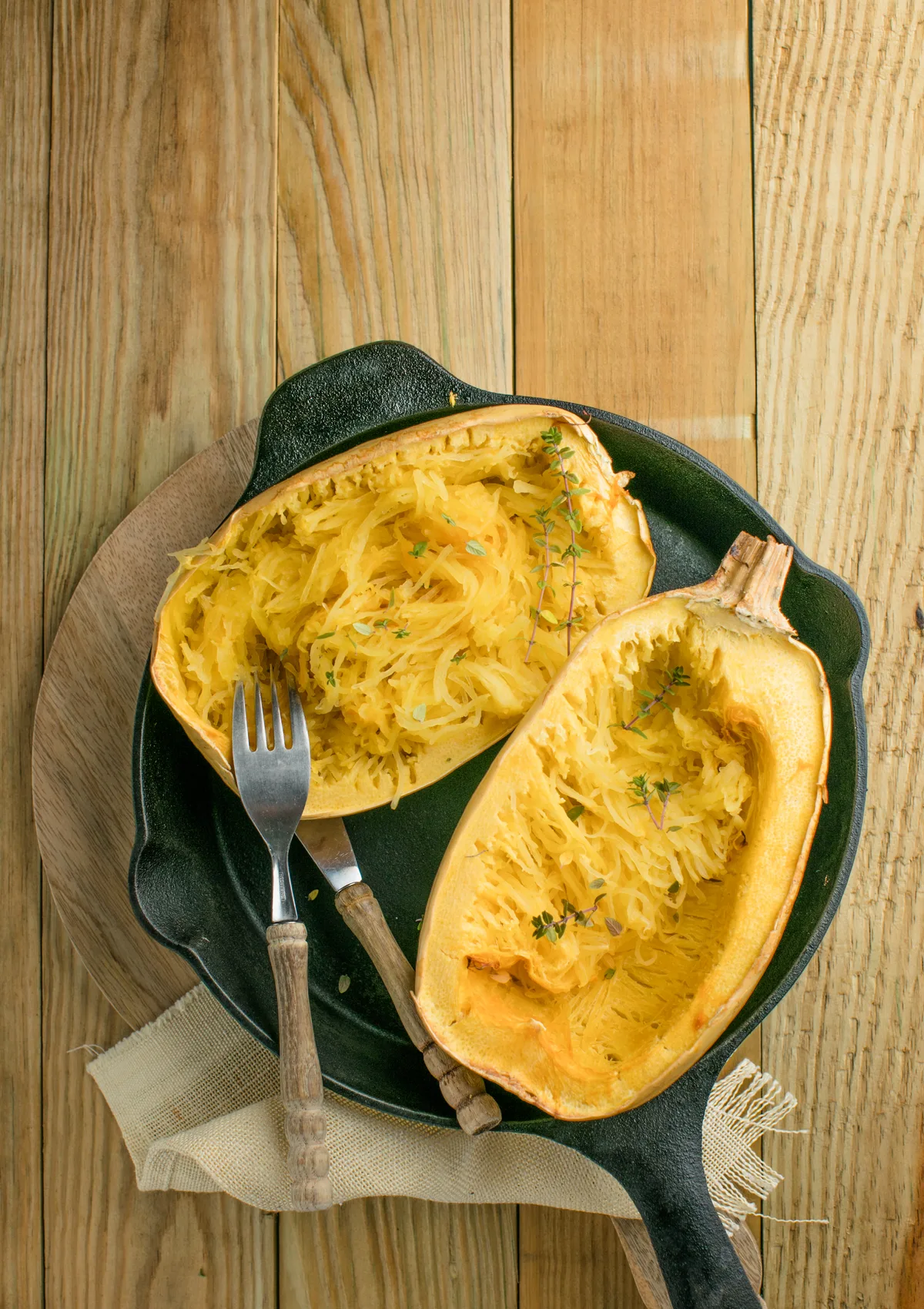
Let the rings cool until comfortable to handle. Remove the outer skin and separate the flesh gently with a fork. Different thicknesses will finish at different times, so take the smaller rings off the pan as they become tender rather than waiting for every piece to match.
A useful detail: slicing crosswise changes how the fibers appear when pulled out. If your family prefers longer strands, handle each cooked ring gently and avoid shredding it aggressively. If you’re folding squash into a casserole, the exact strand length hardly matters.
How to Microwave Spaghetti Squash
If dinner is running late, the microwave is usually the quickest route. The flavor is milder than roasted squash and the strands retain more moisture, but you can have a warm vegetable base in about a quarter hour. A medium squash often takes roughly 12 minutes on HIGH, depending on wattage.
- Place washed, seeded squash halves cut side down in a microwave-safe shallow dish.
- Add one or two tablespoons of water. Use a vented microwave-safe cover if your dish instructions allow it; never seal it airtight.
- Start with about eight minutes on HIGH. Carefully test with a fork, then continue in two-minute increments until tender.
- Allow the dish to stand for several minutes. Open the lid away from your face so trapped steam does not burn you.
- Pull the strands out gently. If water collects at the bottom, drain briefly before adding sauce.
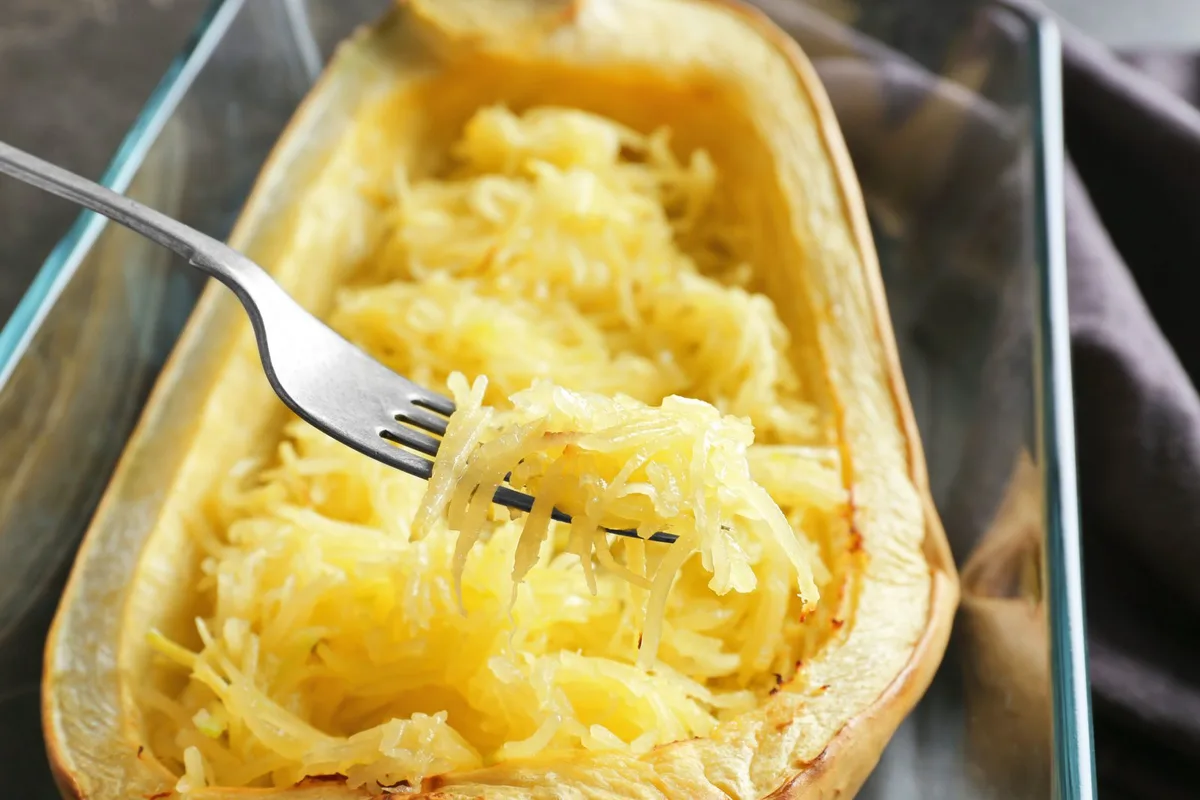
For small squash, checking after eight minutes is sensible; a large one may need well over 12 minutes, or you might microwave one half at a time. The U.S. National Library of Medicine’s MedlinePlus recipe also uses about 12 minutes for a medium squash as a useful reference point.
Keep the seasoning simple if using the microwave: toss the drained strands with butter or oil, a little Parmesan, and finely chopped herbs. Tomato sauce and other moist toppings should go on at the table to avoid a puddle forming under the squash.
How to Steam Spaghetti Squash on the Stove
Stovetop steaming is handy when the oven is occupied or you’re cooking in a small kitchen. Slice the squash into rings or manageable pieces, scoop out the seeds, and place the pieces in a steamer basket over simmering water. Keep them above the waterline; you’re steaming the squash, not boiling it.
Cover the pot and start checking the pieces at about 15 minutes. Medium pieces commonly take 15–20 minutes, with thicker pieces needing more. Watch the water level so the pot doesn’t boil dry. The squash is ready when a fork slips into the flesh easily and the strands can be pulled apart.
Steaming is the gentlest choice for a soft vegetable side, but it won’t produce roasted edges. If you plan to toss it with a rich sauce, let the cooked pieces drain briefly and scrape the strands into a warm bowl. Add only enough sauce to coat them lightly.

How Long to Cook Spaghetti Squash: Interactive Finder
The most useful answer to how long to cook spaghetti squash is a range matched to your equipment and the squash’s size. Two vegetables of equal weight may still cook differently, but a starting window prevents you from either checking every two minutes or forgetting the tray until the strands turn to mush.
Find a starting cook-time range
Choose your equipment and approximate squash size. These are estimates, not automatic finish times.
No signup, tracking, or stored answers.
The finder works completely in your browser; it doesn’t collect your details or send anything away. If the squash still feels resistant at the earliest time, continue cooking in small increments. If the fork glides through the thickest part and strands pull free, it’s ready even if the clock hasn’t reached the upper end.
How to Prevent Soggy Squash
How to cook spaghetti squash without watery strands
Spaghetti squash is naturally moist, so treating it exactly like dried pasta is the fastest path to disappointing texture. The three habits I recommend are avoiding unnecessary added water during roasting, checking early for doneness, and keeping thin sauces away until the very end.
- Roast halves on an open sheet pan without extra water if you want the driest strands.
- Stop when the fork pulls out individual strands; soft enough to mash is too far.
- Let steam escape for a few minutes after cooking instead of sealing the squash while very hot.
- Tip wet strands into a colander briefly before saucing them.
- Use a thicker sauce, serve it separately, and add more only as needed.
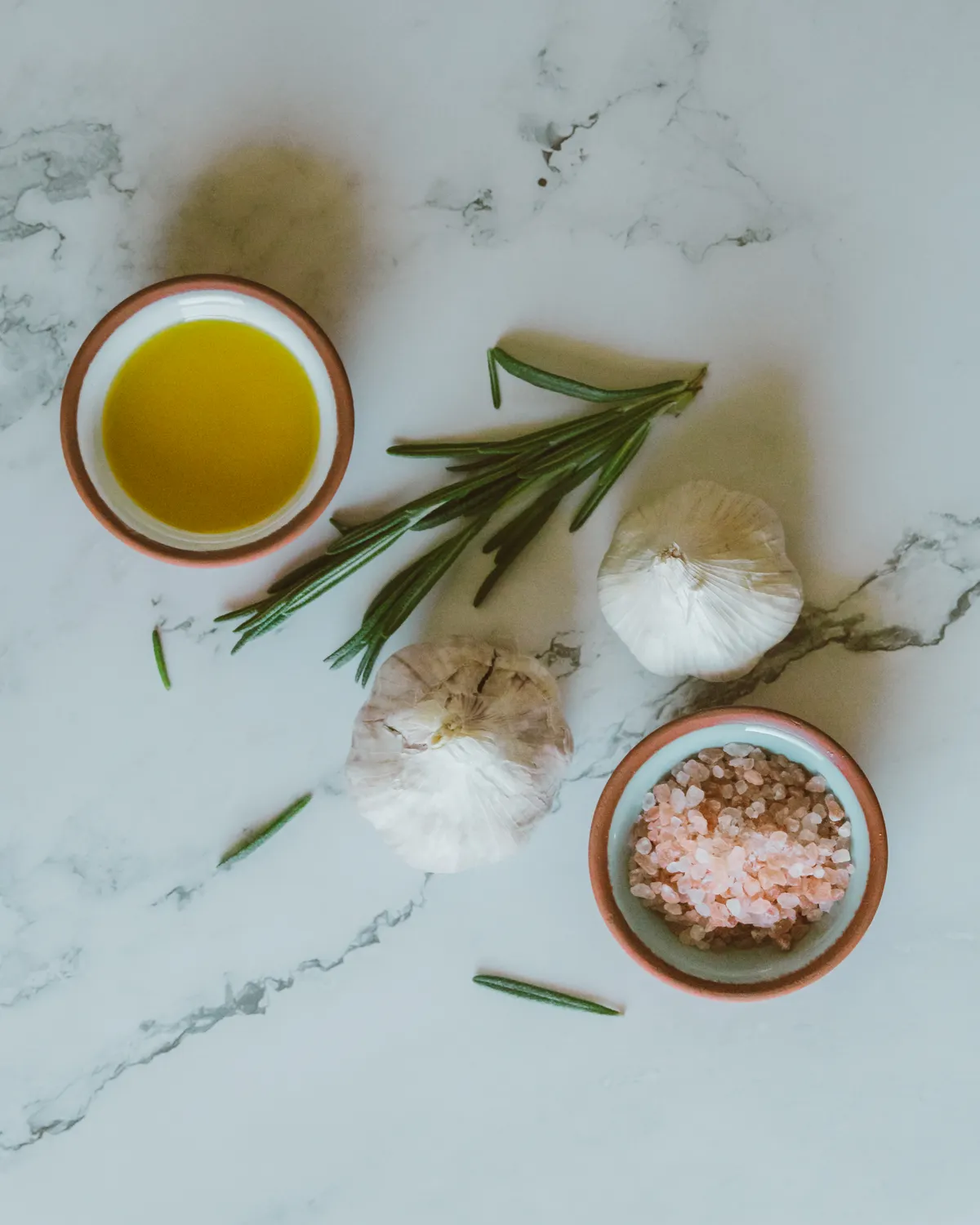
If the flesh is still crunchy after the timer, it probably needs a few more minutes. Return it to the oven or microwave, then test again. If it’s already very soft and watery, extra baking won’t bring back a firm texture. I would use that batch in a casserole, soup, or vegetable patties rather than serve it as a noodle-like side.
Don’t pour a full pot of thin marinara into a single squash shell. Unlike dried wheat pasta, the vegetable won’t soak up much watery sauce. A spoonful or two per serving works better; add more at the table.
For the cleanest presentation, keep the golden strands separate from their shells until you’re ready to plate. Then you can decide whether to serve them as a loose vegetable nest, tuck them back into the squash for a stuffed boat, or mix them into a prepared casserole.
Toppings, Proteins and Serving Ideas
Spaghetti squash tastes mild and slightly sweet; it’s a vegetable rather than a perfect substitute for wheat noodles. That neutral flavor makes it an easy partner for punchy sauces and protein. Start with the protein you want, then choose a sauce thick enough to coat the strands.
Warm marinara, cooked ground turkey, basil, and Parmesan.
Roasted garlic, lemon, parsley, and olive oil alongside cooked salmon.
Cooked chicken, baby spinach, a little pesto, and grated cheese.
White beans, sautéed mushrooms, black pepper, and Parmesan.
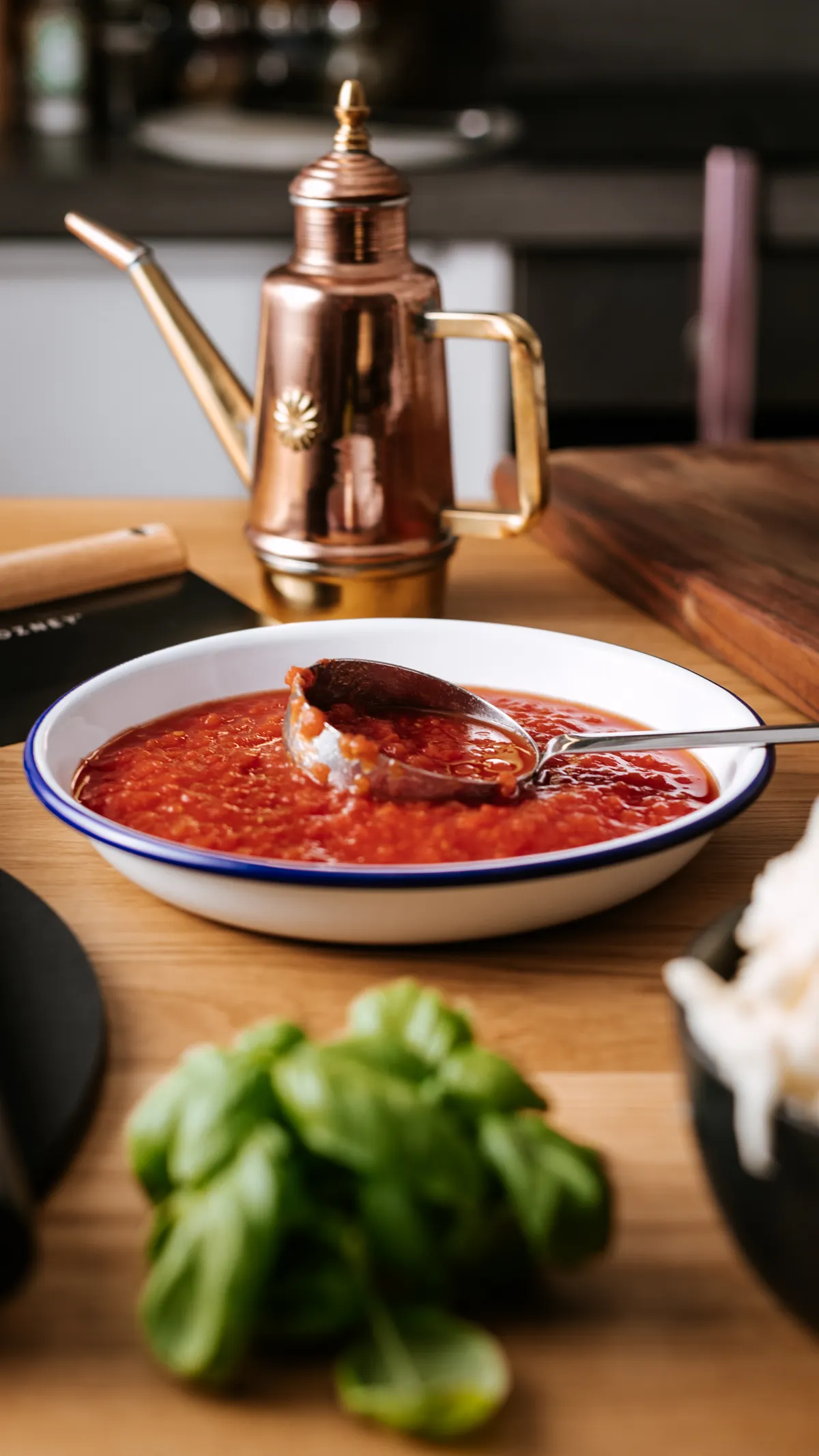
To make this a high-protein dinner rather than only a vegetable side, add a substantial protein source such as cooked chicken, beans, salmon, tofu, or an appropriate cheese-based sauce. Spaghetti squash alone isn’t particularly high in protein. The combinations in our high-protein low-carb meals are useful inspiration.

For a complete weeknight menu, serve the garlic-and-herb version beside our one-pan honey garlic salmon. If your family actually wants pasta, there’s nothing wrong with making it; the creamy high-protein pasta guide offers a different texture and meal.
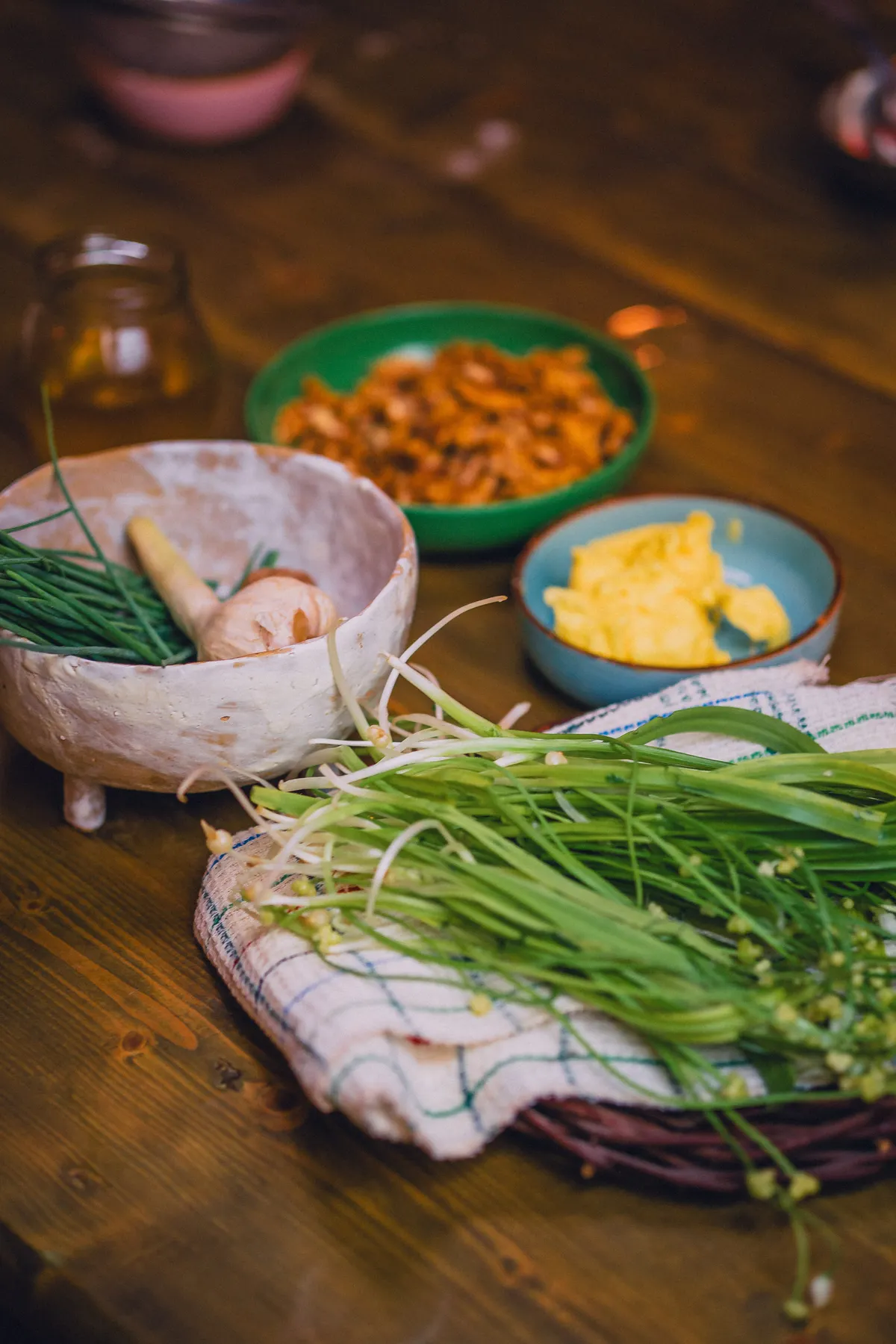
A final texture tip for sauce nights: warm the sauce in a separate skillet and toss only one serving of strands at a time. That way any leftovers stay unsauced and keep better for tomorrow’s lunch. A spoonful of grated Parmesan or toasted nuts at the end gives a little contrast without more liquid.
Storage and Meal Prep
For meal prep, I would store the plain strands separately from the sauce. That makes it possible to reheat exactly the portion you want and keeps the remaining squash from sitting in liquid. Let cooked squash cool promptly, divide it into shallow containers, and refrigerate it within two hours.
Use refrigerated leftovers within three to four days, in line with the general leftovers guidance on FoodSafety.gov. Reheat your portion until it’s steaming hot. A skillet with a tiny splash of oil or water offers more control than repeatedly microwaving the whole batch.
You can freeze cooled spaghetti squash in small freezer-safe containers. Once thawed, the strands tend to be softer and release extra liquid, so I prefer to use frozen portions in casseroles or soups. For meal-prep planning, the structure in our easy meal-prep chicken boxes works nicely with a vegetable side.
Keep the skin-on halves in a covered container if you like serving stuffed boats, or scrape the flesh before storing to save refrigerator space. In either case, avoid packing very hot food in a large, tightly closed container that cools too slowly.
Free Printable Cooking Chart
I made a one-page US Letter cooking cheat sheet for the fridge. It includes oven, microwave, ring, and steam time ranges; a short preparation checklist; and a place to jot down what worked for your own squash. Print it or keep it on your phone.
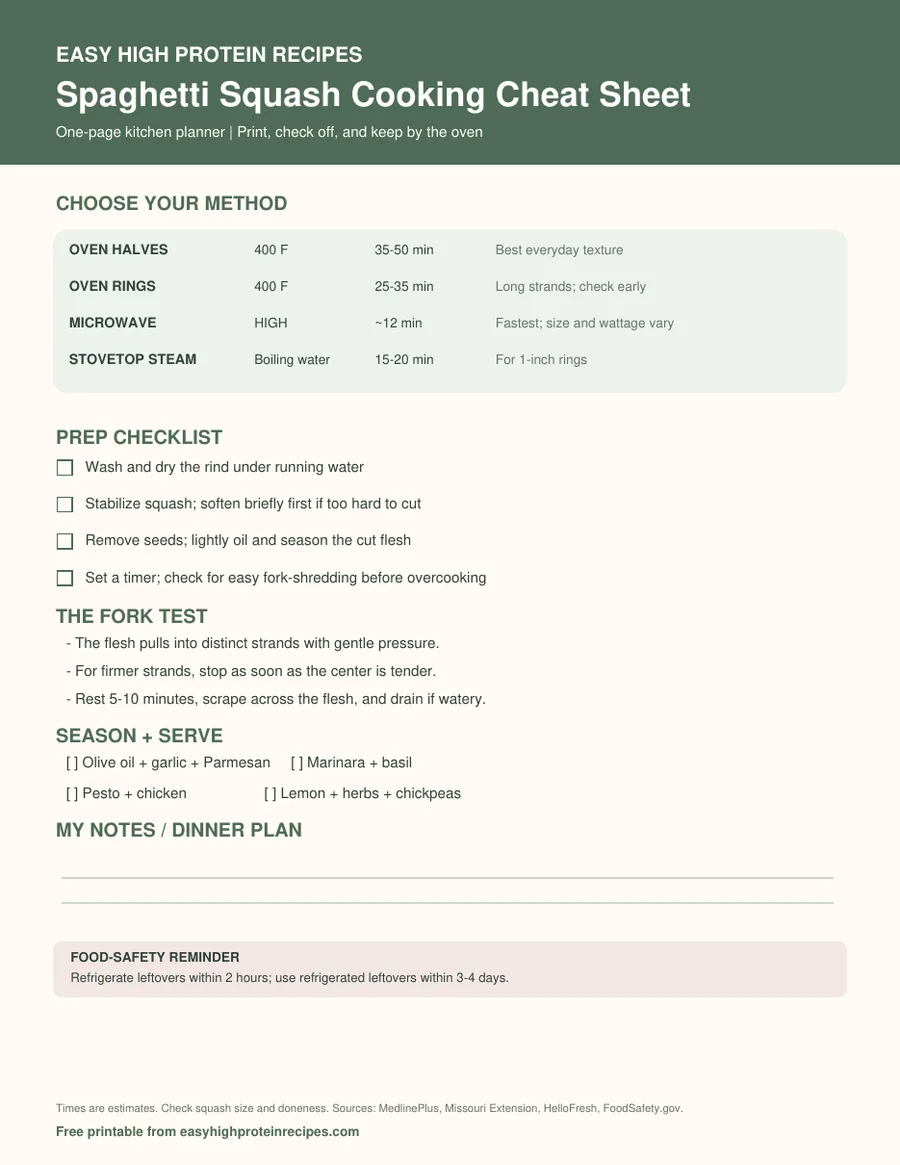
Click the preview to open the PDF.
Frequently Asked Questions
What is the best way to cook spaghetti squash?
For most dinners, roasting two seeded halves cut side down at 400°F is a reliable starting point. Check around 35 minutes for a medium squash and keep cooking until the thickest flesh separates into tender strands. I prefer the flavor to microwaving, especially with a tomato or garlic sauce.
Can you cook a whole spaghetti squash without cutting it first?
Yes, though you should pierce the rind before heating a whole squash and let it cool enough to handle before slicing. Whole squash can be harder to judge for doneness and more awkward to move, so cut halves remain my default when cutting is safe.
How do you tell when the squash is cooked?
Pierce the thickest area and gently pull a fork across the flesh. The fibers should separate without much effort, but not crumble into wet puree. If the center is tough, cook a little longer. If the flesh becomes mushy, it’s overdone for a noodle-like dish.
Do you roast spaghetti squash cut side up or down?
Cut side down is a straightforward default for cooking two halves evenly in a dry pan. Cut side up can give more direct browning on the surface, but the exposed flesh may dry at the edges; monitor it closely and choose according to your preferred texture.
Why is my spaghetti squash watery after roasting?
It may have been cooked too long, roasted with extra water, or mixed with a very thin sauce. Roast without added water for the driest finish, let the squash rest briefly, drain pooled liquid, and add sauce after separating the strands.
Can I cook it the day before?
Yes. Refrigerate cooked strands promptly in shallow containers, use them within three to four days, and reheat the portion you plan to eat. Store sauce separately if you want the least soggy result.
Related Recipes
Build a complete dinner around squash and a protein.
Serve alongside gently seasoned roasted squash.
For nights when you want actual wheat pasta.
Plan portions and flavorful lunches for the week.
Sources and Editorial Note
Cooking times are approximate. The techniques were checked against these government and public-university resources; your squash size, oven, microwave wattage, and preferred firmness may change the cooking time.
- MedlinePlus — Spaghetti Squash, National Library of Medicine
- Iowa State University Extension — Spaghetti Squash
- Utah State University Extension — Winter Squash
- FoodSafety.gov — Cold Food Storage Chart
Editorial note: This is an informational home-cooking guide based on published cooking references and general kitchen technique. The time ranges are not claims of controlled personal testing. Follow your appliance instructions and current food-safety recommendations, and always judge doneness by the squash’s actual texture.



One thought on “How to Cook Spaghetti Squash: 4 Simple, Delicious Methods (+ Free Chart)”